Drafting is only half the battle.
Not everyone wants AI to draft.
Many writers want to keep control over their prose. Many simply enjoy writing it. That's no reason to miss out on AI for the jobs they'd rather not do — and a novel has plenty of those.
Most of the work happens outside the draft.
Before the first word: the worldbuilding and the plotting. After the last: the edit and the pitch. A tool that only drafts leaves you alone with all of it.
Ghostkey can draft, too.
Ask the chat and it will write a scene. But it shines when you hand it the tedious tasks and keep the creative ones for yourself.
If you want AI to draft, it's very good at it.
Describe.
Ask for a description of anything in your scene, and pick the senses it should reach for — sight, sound, smell, taste, touch.
Rewrite.
Write a paragraph plainly and have it rewritten in another style, a famous author's included.
Its own prose model.
Sudowrite runs Muse, an AI model of its own built for fiction, rather than only the general-purpose ones.
The chores, done for you.
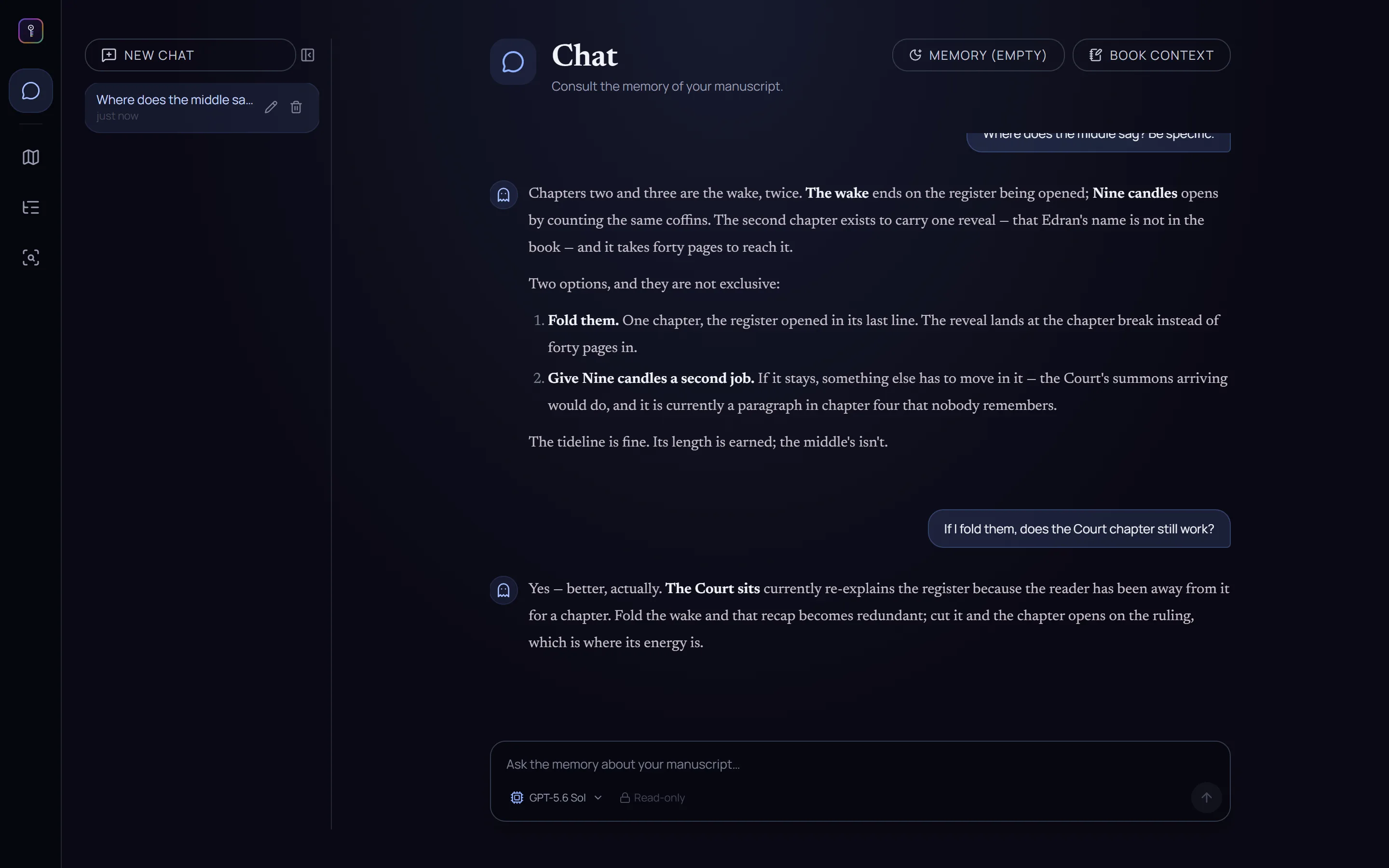
Move a scene. Ghostkey mends the seams.
Tell the chat to move a scene. It adjusts the transitions on either side, and flags whatever the move broke — the reveal that now lands too early, the recap nobody needs any more — so you decide what changes.
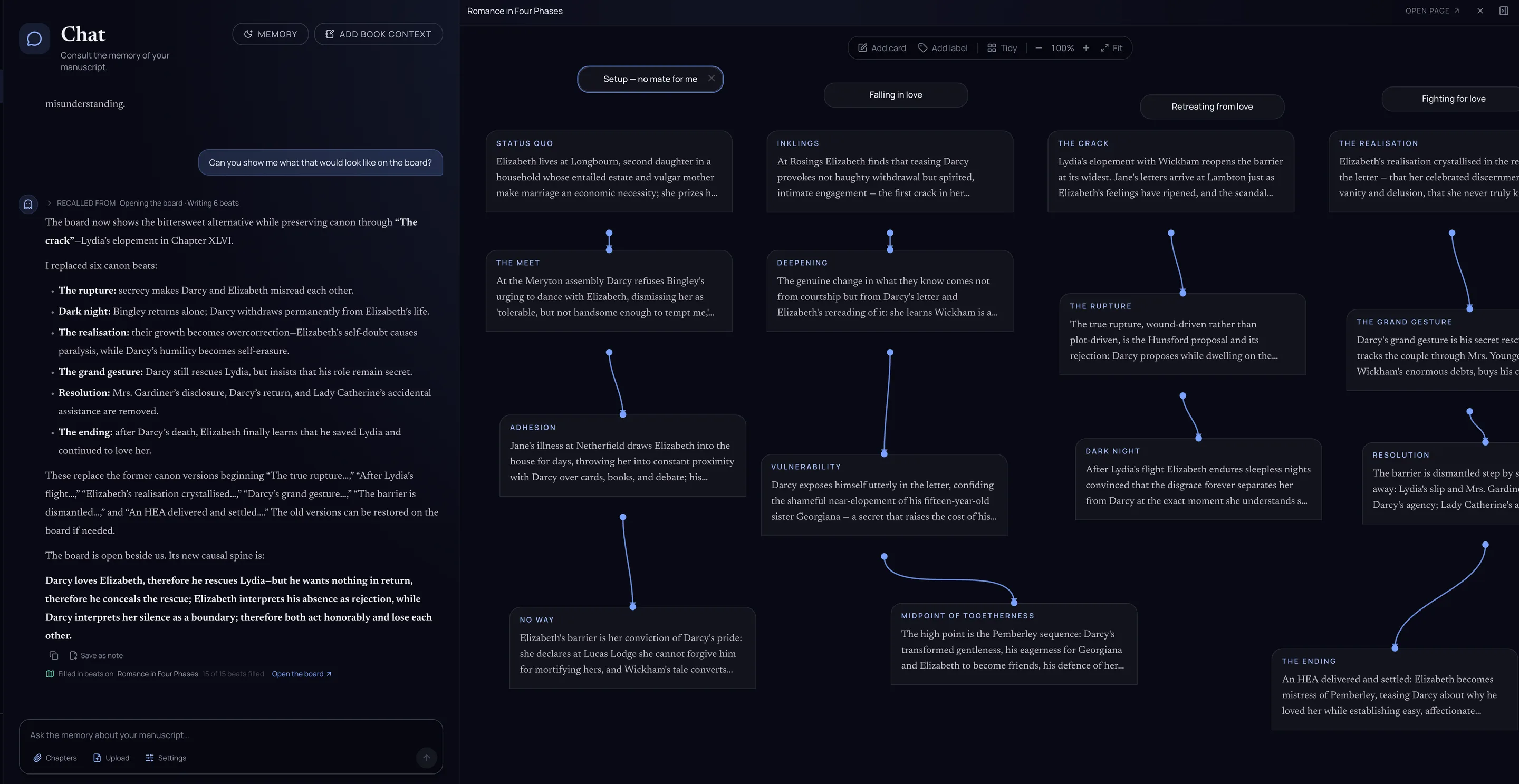
Replot your novel, and get a chapter plan.
Generate a beat sheet from the structure you like, reorganise the beats on the board — by hand or by asking the chat — and Ghostkey turns the result into a chapter plan, ready to write.
An editor's notes, not generic feedback.
Ghostkey reads the whole book for what it sets out to be — your genre, your goals — and hands you an editorial letter and a fully commented Word file: notes in the margins of your own manuscript, tailored to the book you're writing.